How can we play “Goal” safely together?
By Down Syndrome Digital ·
Suggested age: 21–25 months
About this activity
Activity: Goal — a short, child-led play idea for children with Down syndrome aged 21–25 months. Follow your child’s cues and enjoy the activity at their pace.
The illustrations come from the source activity. The written steps have been adapted for safer, child-led play; do not copy equipment or handling positions shown unless they are specifically recommended for your child.
What can this activity invite?
Notice your child’s interest, comfort, and self-directed movement during a shared play moment.
What do I need for this activity?
A comfortable, stable place to play and the familiar items named in the steps. Choose materials made for your child’s age and ability; keep small parts, loose strings, plastic bags, and balloons away from babies and young children.
How do I play this activity?
1. Set up on the floor
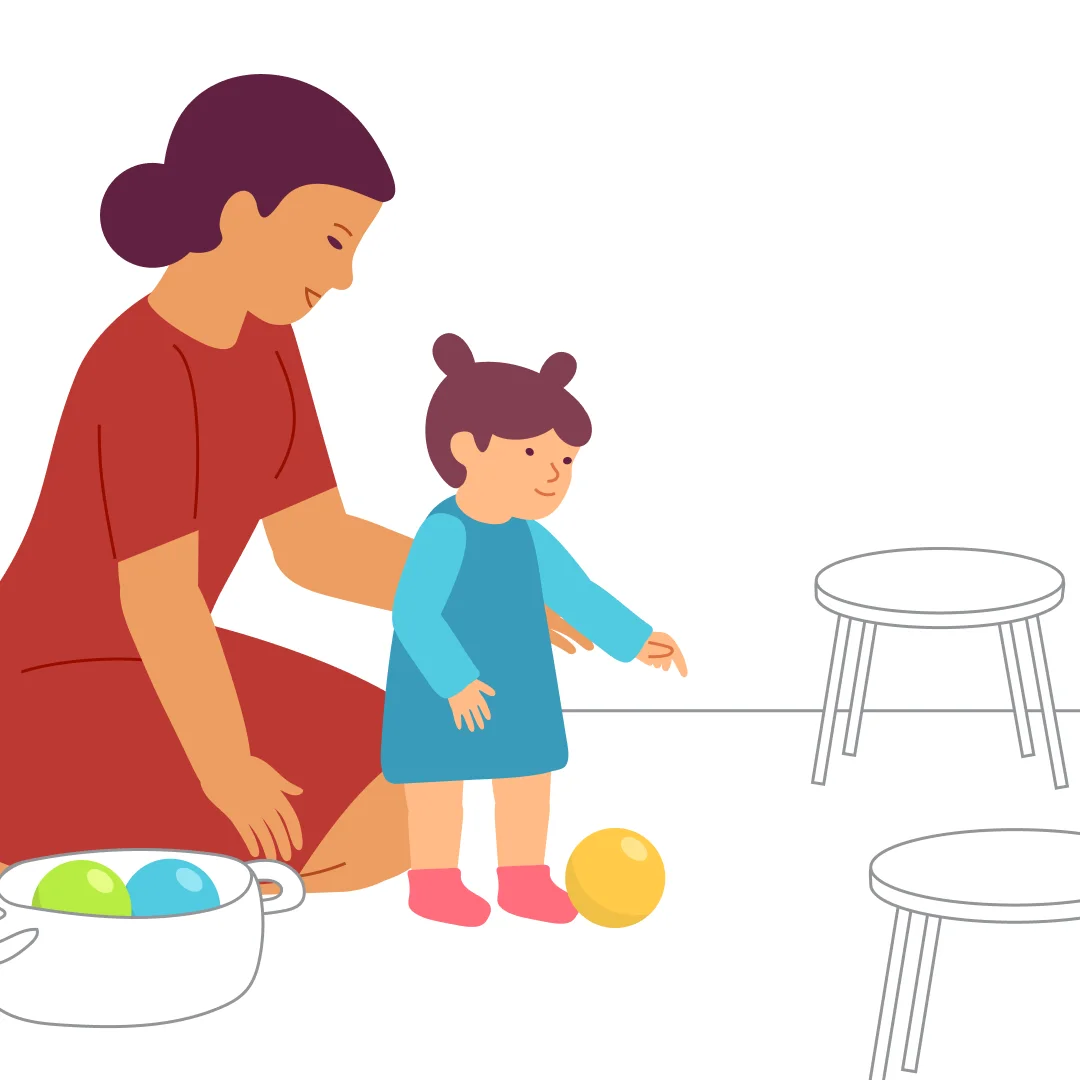
Choose a clear, level space and a large, soft ball made for your child’s age. Do not use an exercise or gym ball.
2. Get comfortable
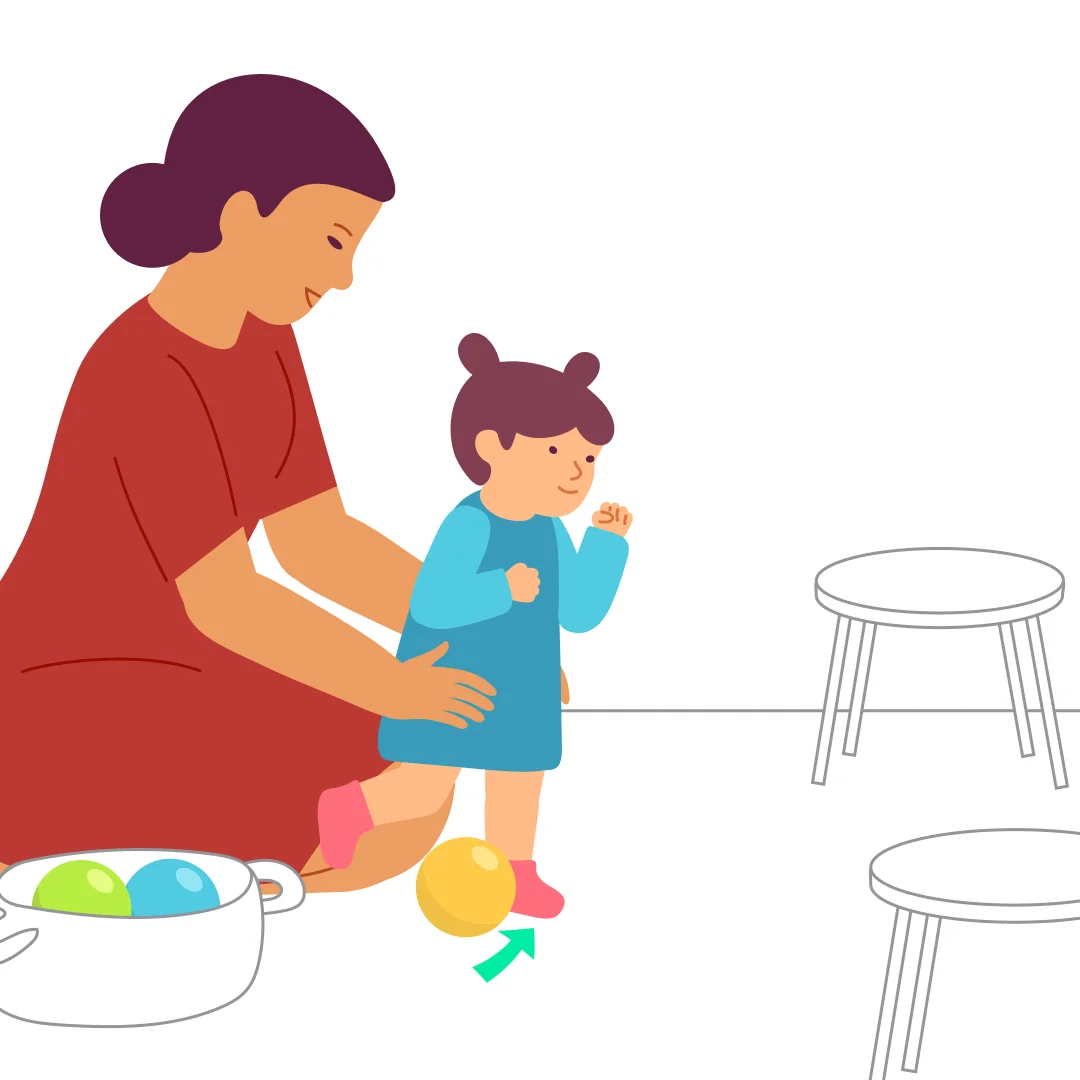
Let your child sit, stand, or rest in a position they already manage safely. Do not balance them on furniture or hold them upright.
3. Roll gently
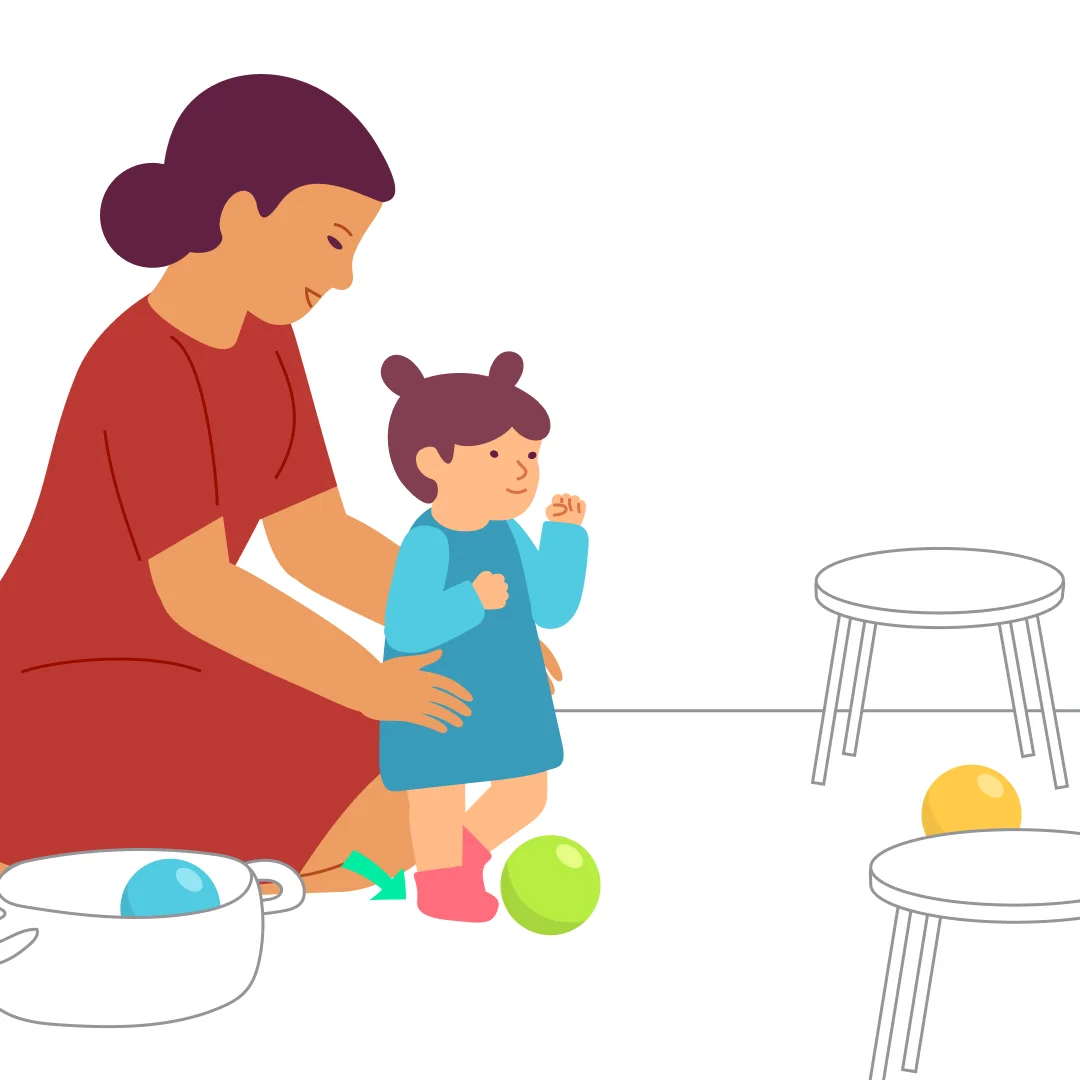
Roll the ball slowly along the floor and keep it within easy reach. Let your child choose whether to touch, roll, or watch.
4. Keep play predictable
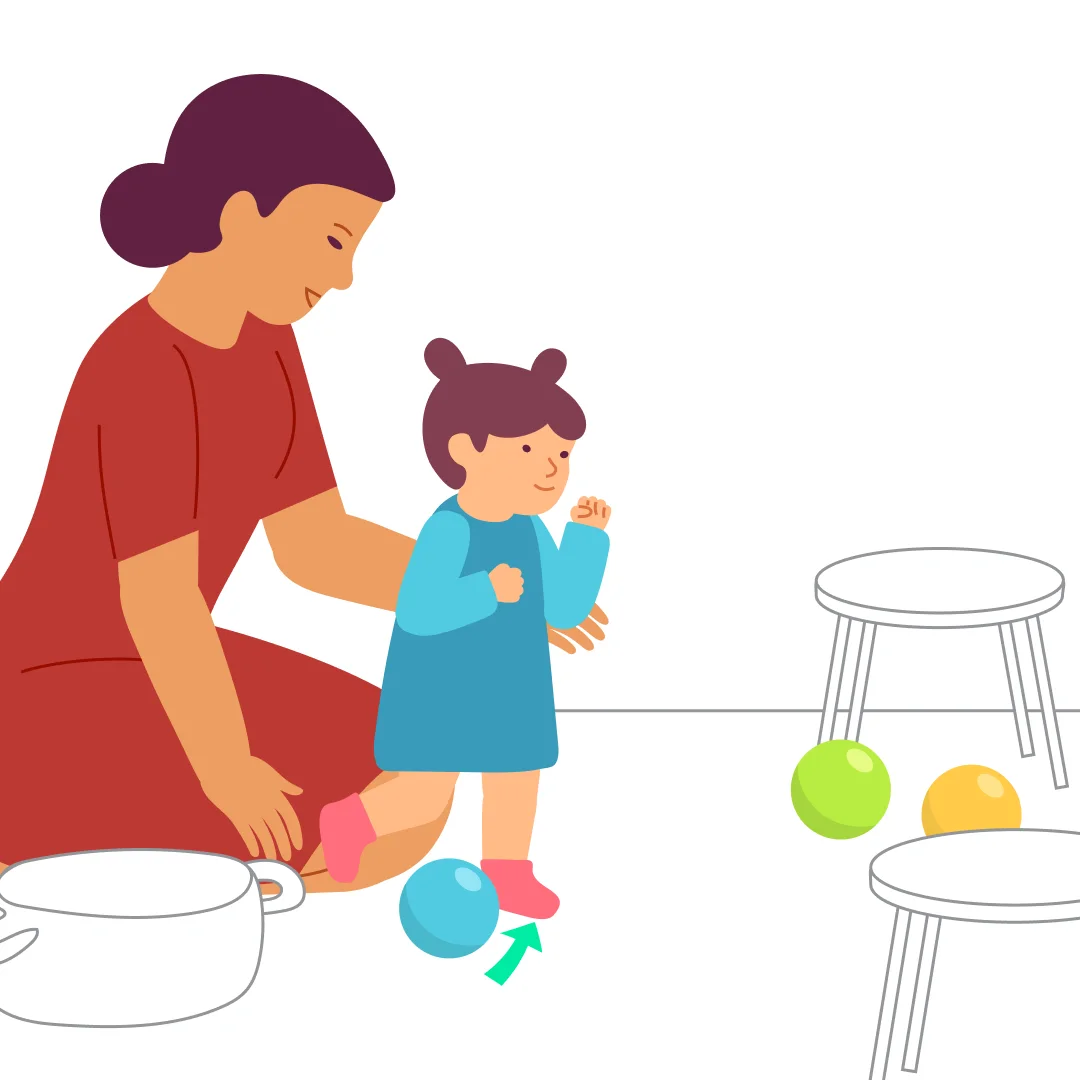
Do not throw the ball toward your child or ask them to catch it. Pause between turns and give them time to respond.
Frequently asked questions
Does my child need to finish every step?
No. Follow your child’s interest and stop whenever they need a break. There is no correct pace or required outcome.
What if my child is not interested today?
That is okay. Pause, try another activity, or return another day. Looking away or turning away is a cue to give your child space.
How long should we play?
There is no set duration. A short, comfortable moment is enough; stop if your child seems tired, distressed, or uncomfortable.
Is this therapy or a developmental assessment?
No. This is a play invitation, not therapy, a milestone target, or an assessment. It does not replace advice from your child’s clinicians.
Can I adapt this activity for my child?
Yes. Keep it comfortable and child-led. For questions about feeding, oral-motor skills, bath safety, positioning, or movement, use guidance from your child’s own care team.