How can I play “Playing with Friends” with my child?
By Down Syndrome Digital ·
About this activity
Activity: Playing with Friends — a short, child-led play idea for children with Down syndrome. Follow your child’s cues and enjoy the activity at their pace.
These steps are invitations to play, not therapy or a milestone test. Choose a comfortable, stable position, supervise closely, and pause whenever your child needs a break.
What can this activity invite?
This activity may offer opportunities to notice:
• Choose items to take for a walk by understanding what they’re for (for the sandbox, for playing ball, for pretend play with cars, etc.).
• Practice using plural words when naming objects.
• Build initiative in play, practice parallel play, and develop cooperation skills.
• Gain experience playing with other children: watch them, invite them into play or say no, and pick specific children to play with based on personal preferences.
• Understand that their actions can have consequences (for example, making someone happy or upsetting someone).
• Pay attention to other people’s emotional reactions.
• Share and trade toys with other children.
• Play games with several children.
What do I need for this activity?
A comfortable, stable place to play and the familiar items named in the steps. Choose materials made for your child’s age and ability; keep small parts, loose strings, plastic bags, and balloons away from babies and young children.
How do I play this activity?
1. When getting ready for a walk, talk with your child about what you will bring with you
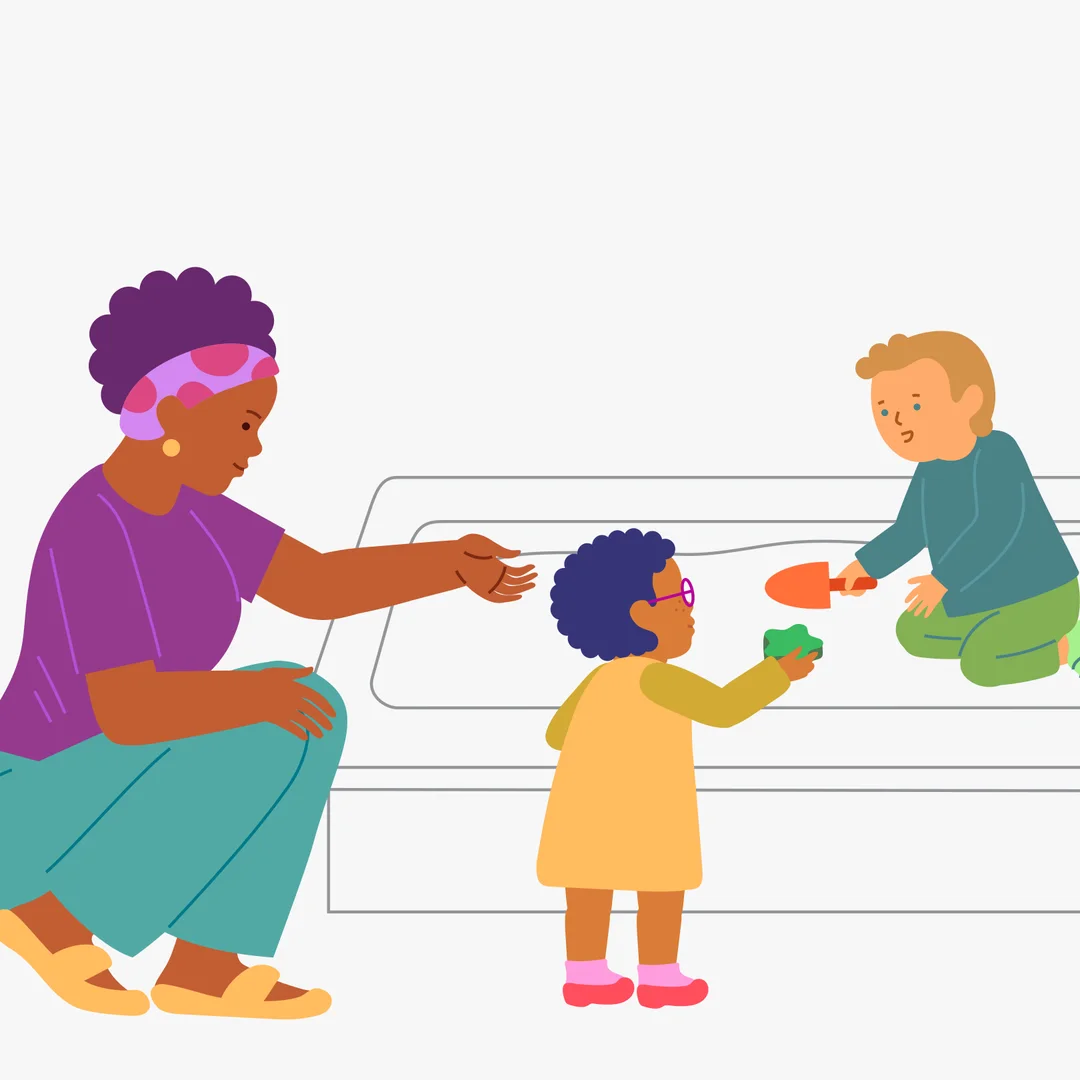
Choose toys that work well for playing together—for example, a ball or a few molds. Use a general name for them: “sandbox toys,” “toys for playing …” During the walk, give your child a chance to initiate play with other children. Suggest: “Look, this is Petya. Play with him.” Let your child play next to the other child. If the children do not pay attention to each other, suggest: “Let’s offer him one of our molds.
2. Try this together
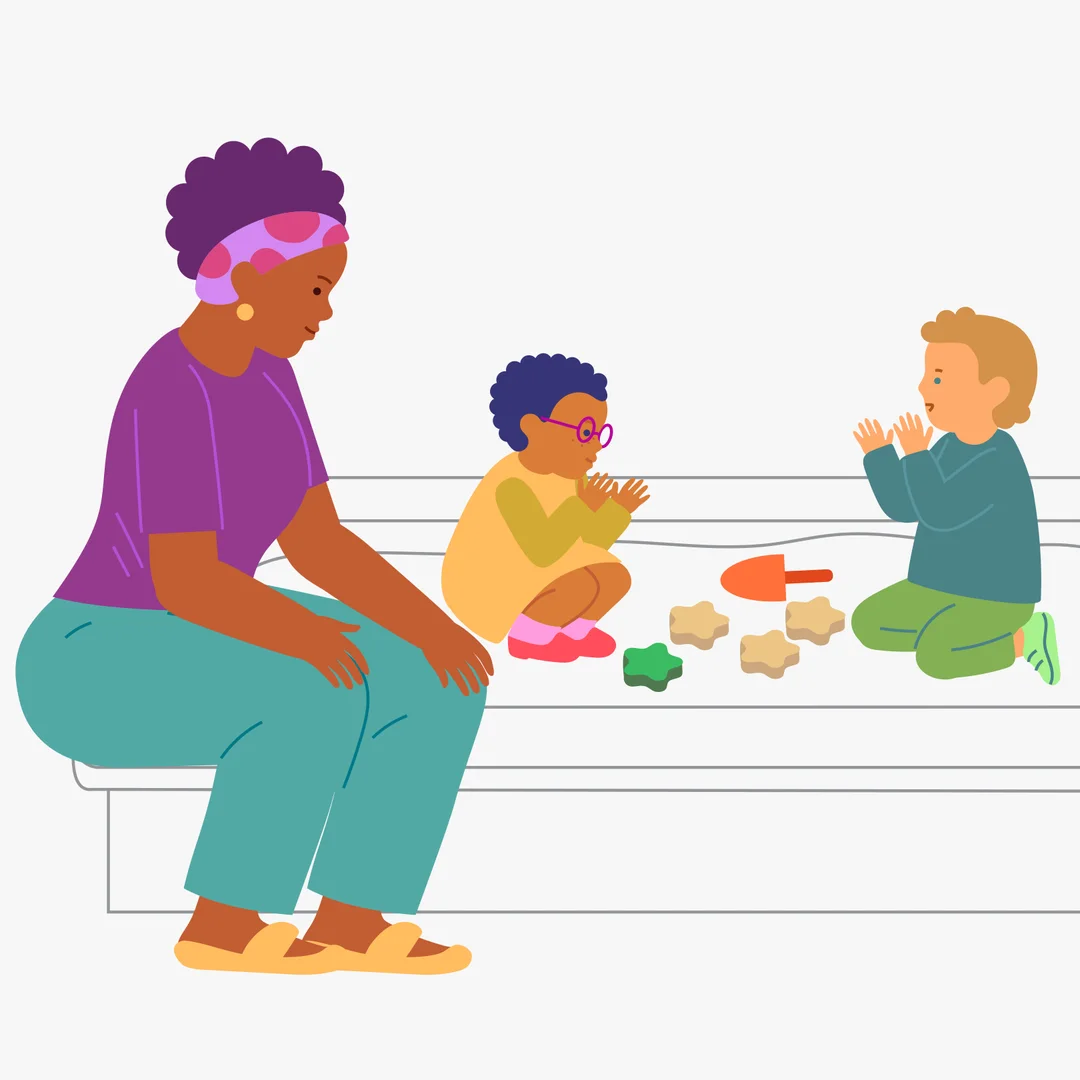
Draw your child’s attention to other children’s reactions: “Look, we helped Petya make sand cakes, and Petya was happy,” or “Petya doesn’t want to play with us. Let’s not bother him.
3. Try this together
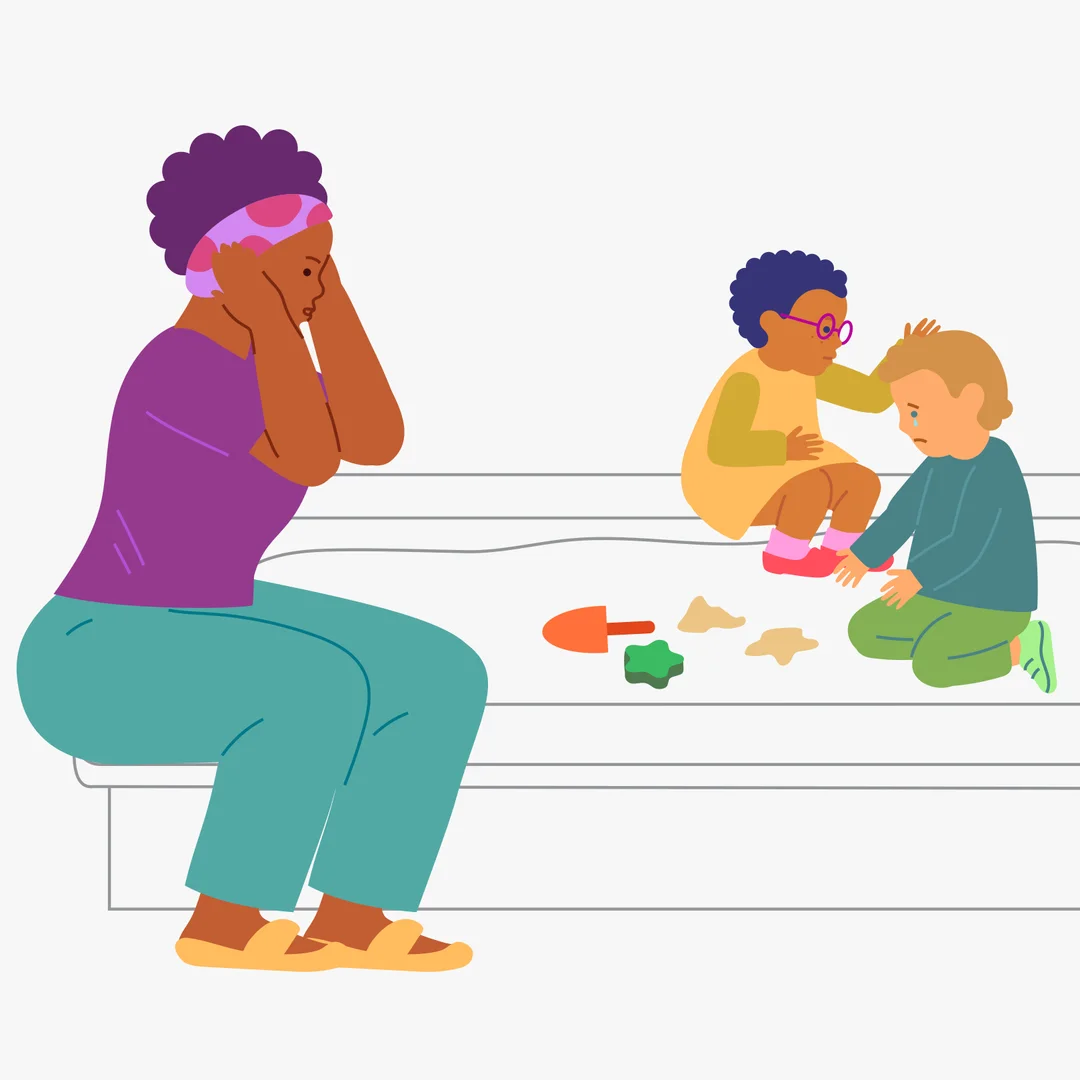
If unpleasant situations happen during play, also name what happened and the feelings: “Look, Petya fell down and is crying. Comfort him,” or “Petya is happy to see you. Say hello to him!” Explain and model the greeting that is used in your family.
4. Try this together
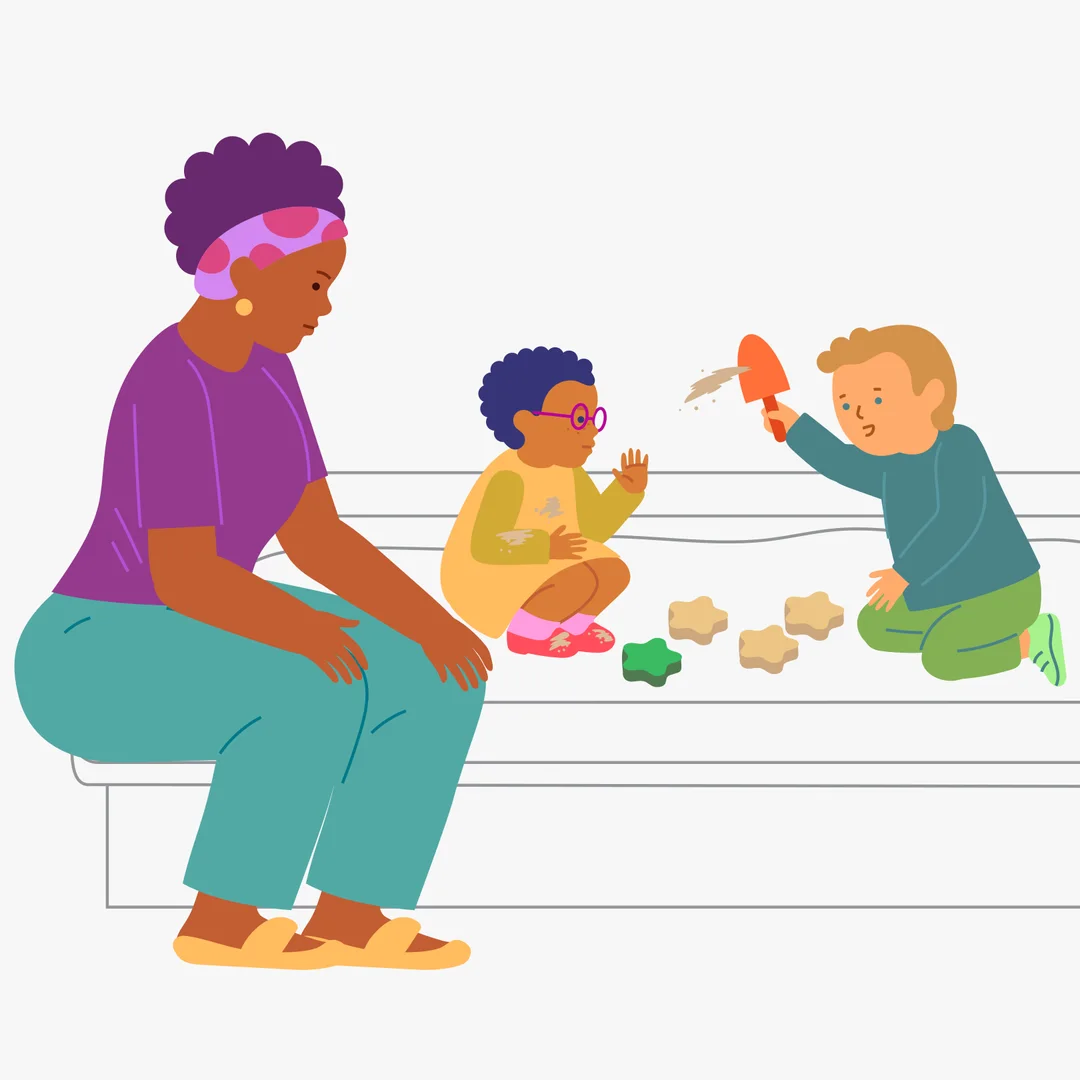
Help your child learn a way to refuse play or communication that protects their boundaries and is respectful toward others. If your child pushes someone, correct them: “No pushing. You don’t want to play with Petya? Tell him/show him: I don’t want to.” Teach your child to show the “stop” gesture in response to unwanted behavior from someone else.
Frequently asked questions
Does my child need to finish every step?
No. Follow your child’s interest and stop whenever they need a break. There is no correct pace or required outcome.
What if my child is not interested today?
That is okay. Pause, try another activity, or return another day. Looking away or turning away is a cue to give your child space.
How long should we play?
There is no set duration. A short, comfortable moment is enough; stop if your child seems tired, distressed, or uncomfortable.
Is this therapy or a developmental assessment?
No. This is a play invitation, not therapy, a milestone target, or an assessment. It does not replace advice from your child’s clinicians.
Can I adapt this activity for my child?
Yes. Keep it comfortable and child-led. For questions about feeding, oral-motor skills, bath safety, positioning, or movement, use guidance from your child’s own care team.