How Can We Play “Clap Those Little Hands!” Together?
By Down Syndrome Digital ·
Suggested age: 6–10 months
What is the “Clap Those Little Hands!” activity?
This nursery-rhyme game, listed for babies aged 6–10 months, uses a familiar voice and simple gestures to invite a baby with Down syndrome to listen and share attention. Your baby can watch, smile, move, vocalize, or simply rest; clapping is not required.
What can this activity invite?
• Listening to a familiar voice and rhythm
• Sharing attention with a caregiver
• Watching simple gestures
• Taking a relaxed turn through a look, sound, or movement
What do I need for this nursery-rhyme game?
Choose a calm moment and a comfortable, supported position on the floor or in a caregiver’s lap. You only need your voice and your hands.
How do I play “Clap Those Little Hands!”?
1. Get comfortable together
Choose a position your baby already manages comfortably and safely. Stay close and make sure your baby is awake and supported.
2. Sing and model
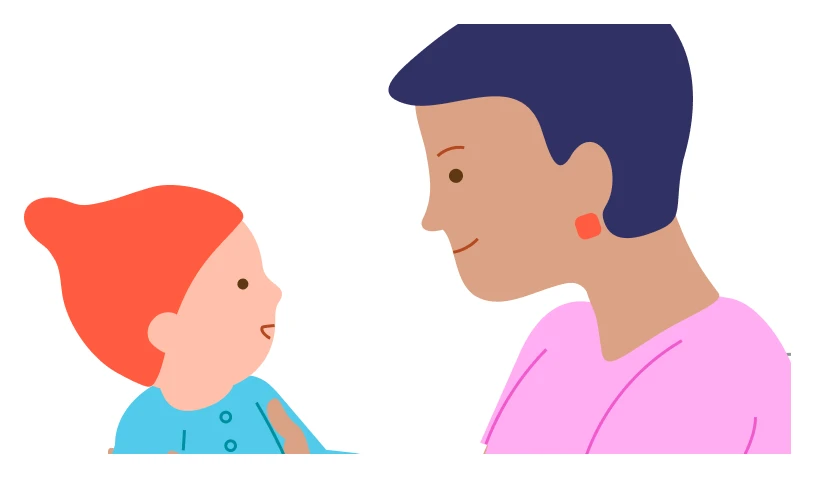
Sing a familiar rhyme slowly. When the words invite clapping, clap your own hands gently where your baby can see them.
3. Pause for your baby
Stop singing for a moment and wait. Your baby might look, smile, make a sound, lift an arm, or do nothing. Give them time without asking for a particular response.
4. Follow the rhythm
If your baby seems interested, sing the verse again or add a small gesture of your own. Let your baby move their hands or legs if they choose; do not move their arms for them.
5. End on your baby’s cue
Finish the song when your baby looks away, becomes tired, or seems ready for a break. A short, enjoyable turn is enough.
How do I keep this activity safe?
Stay close and support your baby in a position they manage comfortably. Do not force clapping, move your baby’s arms or legs, or cover their face or eyes. Stop if your baby is uncomfortable or overwhelmed.
Frequently asked questions
Does my baby need to clap?
No. The song is a chance to share a moment, not a test. Looking, listening, smiling, moving, or taking a break are all okay.
Can I move my baby’s hands to the song?
Do not move your baby’s hands or arms for them. Model the action on your own body and give your baby time to respond.
What if the song seems too stimulating?
Pause or stop, lower your voice, and give your baby a quiet break.