How to Encourage Cooing and Babbling Through Play
By Down Syndrome Digital ·
Suggested age: 6–10 months
What is cooing and babbling play?
Cooing and babbling play is a face-to-face turn-taking game for babies with Down syndrome aged 6–10 months. A caregiver makes a simple sound, pauses, and responds to any sound or expression the baby shares.
What can this activity invite?
• Looking toward a familiar face
• Listening to a caregiver’s voice
• Enjoying a pause-and-response turn
• Sharing coos, babbles, or other sounds
What do I need for this activity?
No equipment is needed. Find a comfortable, quiet spot where your awake baby can see your face. Sit nearby on the floor or use a supportive position recommended for your baby.
How do we play a babbling game?
1. Get face to face
Settle where your baby can see you comfortably. Say their name or make a gentle sound to invite their attention.
2. Make a simple sound
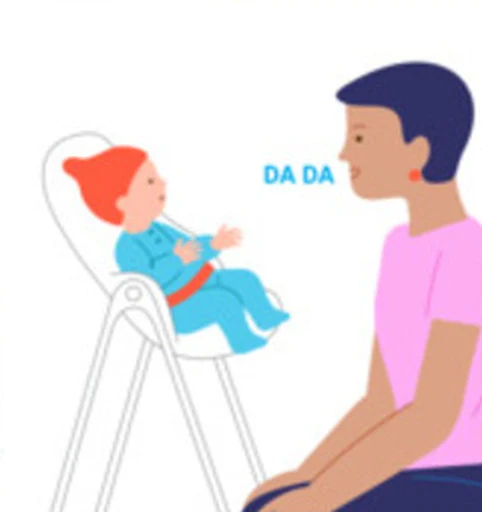
Try a soft “ba-ba,” “ma-ma,” or “aaa.” Use a comfortable volume and give your baby time to listen.
3. Pause and listen
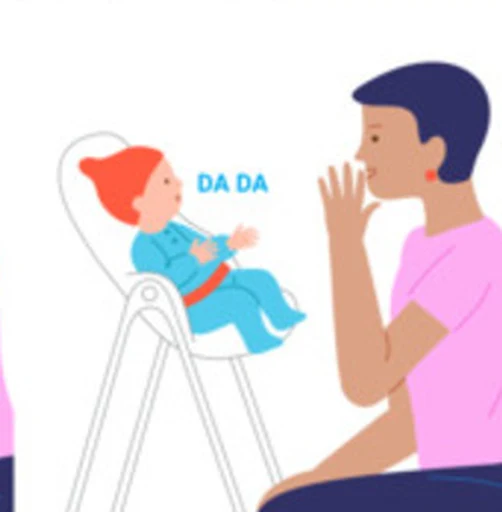
Pause briefly. Your baby might coo, babble, smile, look, or move. Notice their response without asking them to copy you.
4. Answer your baby
If your baby makes a sound, you can repeat it gently and smile. Then pause again. Keep the exchange relaxed and finish when either of you is ready.
Keep play safe and enjoyable
Keep the game gentle and at a comfortable volume. Stay close and stop if your baby seems tired or uncomfortable. Communication develops in many ways; this game does not need to produce a particular sound.
Frequently asked questions
What if my baby does not babble back?
That is okay. Your baby may listen, look, smile, or simply enjoy being with you. There is no need to repeat the game until they make a sound.
Should I touch my baby’s lips to help them make a sound?
No. Do not touch or move your baby’s lips. You can model a sound yourself and give them time.
How long should we play?
Follow your baby’s cues. A few relaxed turns are enough, and you can stop at any time.
Is babbling a milestone test?
No. This is a playful way to share sounds, not a test or a prediction of when your baby will speak.