How Can I Support Cup Practice for My Baby with Down Syndrome?
By Down Syndrome Digital ·
Suggested age: 6–10 months
What is the “Drinking from a Cutout Cup” activity?
The workbook lists this activity for ages 6–10 months. This page is only for cup practice that is already part of your baby’s individual feeding plan. The age range does not show that a baby is ready to drink from a cup, and this activity does not replace advice from a pediatrician or feeding and swallowing specialist.
What can this activity invite?
• Sharing a calm, responsive mealtime moment
• Looking at or exploring a cup
• Communicating through a look, reach, or pause
• Practicing a clinician-recommended cup routine, if appropriate for your baby
What do I need for this cup activity?
Use only the cup, liquid, amount, and position recommended for your baby. Use a stable feeding seat that keeps your baby upright and supported, following the care plan and the seat manufacturer’s instructions. If cup practice has not been recommended, do not offer a drink for this activity.
How do I play the cup activity?
1. Check your baby’s feeding plan
Confirm that cup practice is appropriate for your baby and ask which cup, liquid, amount, and position to use. Do not introduce a new liquid or change its consistency for this activity.
2. Set up an upright position
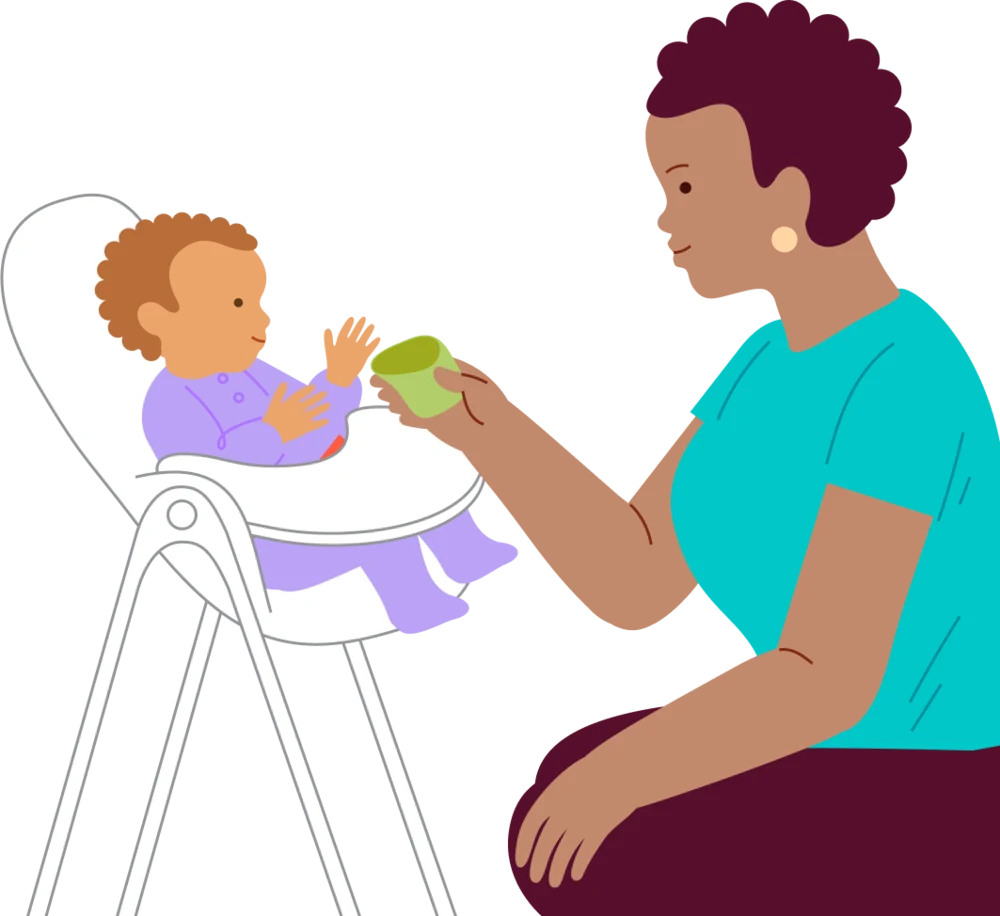
Use the stable, supported feeding position recommended for your baby. Make sure your baby is awake and alert, and stay close throughout.
3. Let your baby look first
Show the cup and pause. If cup practice is not part of the feeding plan, use an empty, age-appropriate cup for looking only—or skip the activity.
4. Offer only what the plan allows
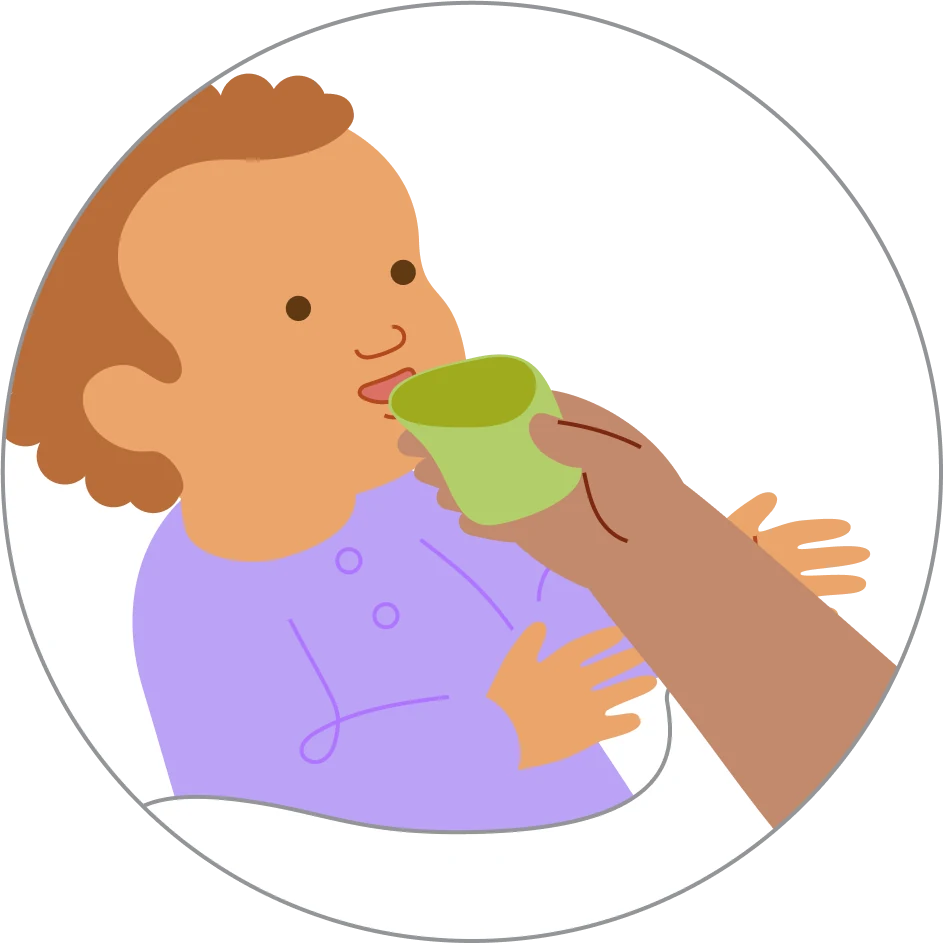
If your baby is interested and their plan allows a sip, offer the recommended liquid in the recommended way. Let your baby set the pace. Do not pour liquid into their mouth, press the cup against their lips, close their mouth, or move their jaw.
5. Pause or finish
Give your baby time between offers and stop when they turn away, close their mouth, become tired, or seem distressed. Follow your care team’s guidance if anything concerns you.
How do I keep this activity safe?
Only offer a drink when cup practice is included in your baby’s individual plan. Keep your baby awake, upright, supported, and supervised. Never feed a baby while lying down or in a reclined bouncer. Stop if your baby coughs, chokes, has breathing or colour changes, or seems distressed, and follow your clinician’s advice.
Frequently asked questions
Does the 6–10 month age range mean my baby is ready for cup drinking?
No. It is the age range listed in the source workbook, not an assessment of readiness. Ask your baby’s clinician or feeding specialist.
What if my baby has not been advised to practice with a cup?
Do not offer a drink for this activity. Ask your baby’s care team whether cup practice is appropriate.
Should I close my baby’s lips around the cup?
No. Do not press the cup against your baby’s mouth or move their lips or jaw. Follow the feeding plan and let your baby set the pace.