How to Explore Textured Toys Safely with Your Baby
By Down Syndrome Digital ·
Suggested age: 6–10 months
What is “fascinated by little details” play?
This sensory play idea invites a baby with Down syndrome, listed at 6–10 months in the source, to look at and explore a baby-safe toy. Offer a toy with large, securely made textures or features and let your baby investigate at their own pace.
What can this activity invite?
• Looking closely at a toy
• Touching and exploring different textures
• Reaching with one or both hands
• Sharing attention with a caregiver
What do I need for this activity?
Choose a toy labelled as suitable for your baby’s age, with large features that cannot come loose. Do not add buttons, ribbons, elastic, strings, or other small or detachable parts to a homemade toy.
How do we explore a toy’s details?
1. Choose a safe toy
Use a clear floor mat or another comfortable play position. Check that the toy is intact, age-appropriate, and has no loose pieces before offering it.
2. Show one feature
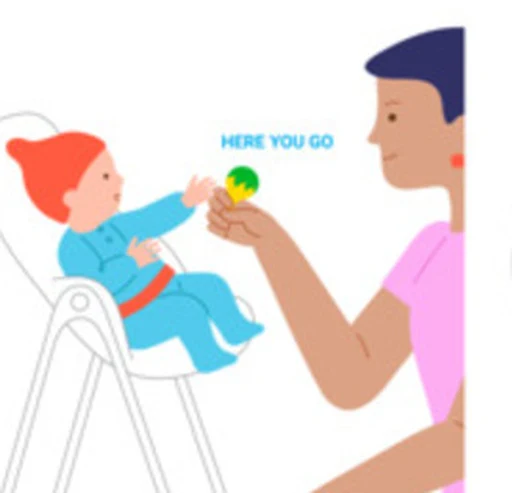
Hold the toy where your baby can see it. Name one thing they might notice: “Look at the green ball,” or “This part feels soft.” Keep the game simple.
3. Let your baby explore
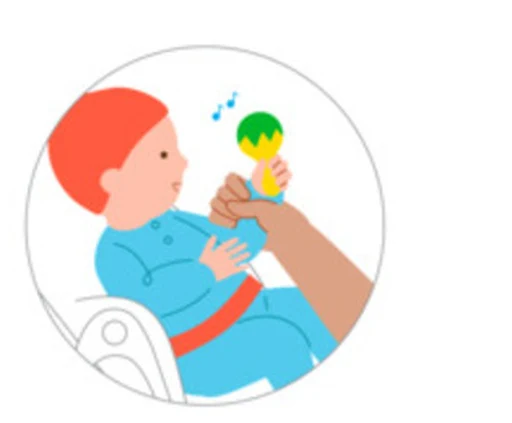
Offer the toy within comfortable reach and wait. Let your baby touch, hold, or mouth it only if the toy is designed for that use. Do not wrap your hand around your baby’s fist or move their arm.
4. Finish when your baby is ready
If your baby remains interested, you can offer another age-appropriate toy. Put toys away if your baby becomes tired, and check them again for damage before the next play session.
Keep play safe and enjoyable
Stay within arm’s reach and supervise closely, especially if your baby mouths toys. Never use loose strings, elastic, buttons, or parts that can detach; remove a damaged toy from play.
Frequently asked questions
Can I tie ribbons or buttons to a rattle?
No. Do not add ribbons, elastic, buttons, or small detachable pieces. Use a toy made for your baby’s age with features that are securely attached.
What if my baby puts the toy in their mouth?
Use only toys labelled as suitable for your baby’s age and designed for mouthing, check them for damage, and supervise closely. If you are unsure about a toy, choose another.
Should I guide my baby’s hand to a detail?
No. Let your baby explore in their own way. You can point to a feature or describe it without moving their hand.
Does my baby need to use both hands?
No. Looking or touching with one hand is enough. Follow your baby’s interest and stop whenever they need a break.