How Can I Share a Gentle Lap-Time Song with My Baby with Down Syndrome?
By Down Syndrome Digital ·
Suggested age: 6–10 months
What is the “Springy Bounces on an Adult’s Lap” activity?
The source lists this activity for babies aged 6–10 months. This safer version turns it into a calm lap-time song—not practice for standing, bearing weight, or bouncing your baby. It invites a shared moment through voice and gentle movement while your baby stays fully supported. The age range is from the source, not a developmental deadline.
What can this activity invite?
• Listening to a familiar voice or song
• Sharing attention with a caregiver
• Noticing gentle changes in rhythm
• Responding with a look, sound, movement, or rest
What do I need for this lap-time song?
Choose a sturdy chair for the adult, with both feet on the floor. You only need your voice. Make sure your baby is awake and comfortable before you begin.
How do I play the gentle lap-time song?
1. Get settled
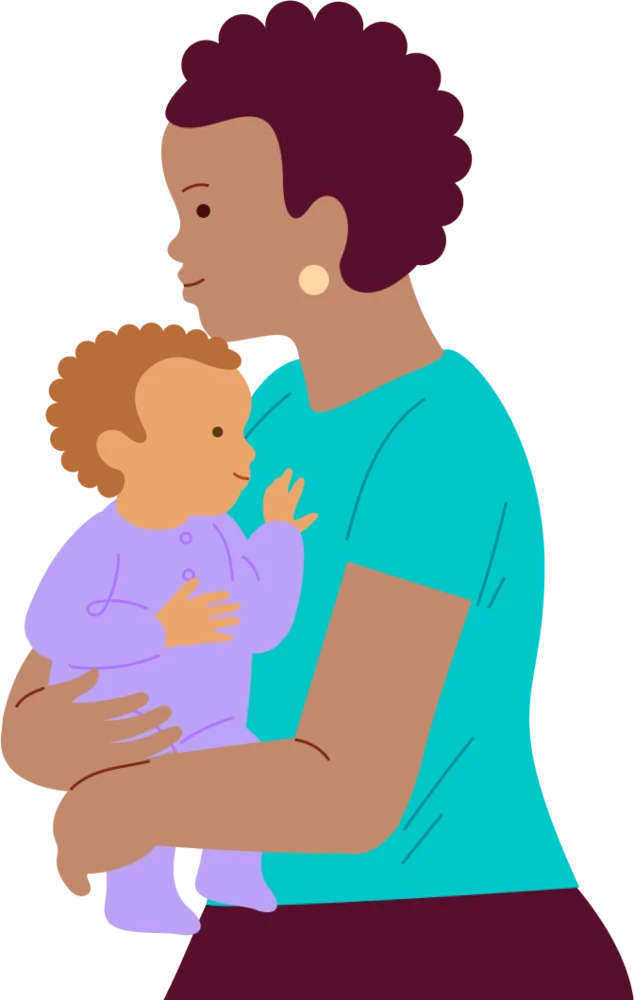
Sit securely with your feet on the floor. Hold your baby close on your lap or against your chest, supporting their head and body in a position they already manage comfortably.
2. Start with a familiar song
Sing softly or say a short, playful phrase such as “hop-hop” while your baby rests securely in your arms. Keep your voice at a comfortable volume.
3. Add only a gentle sway
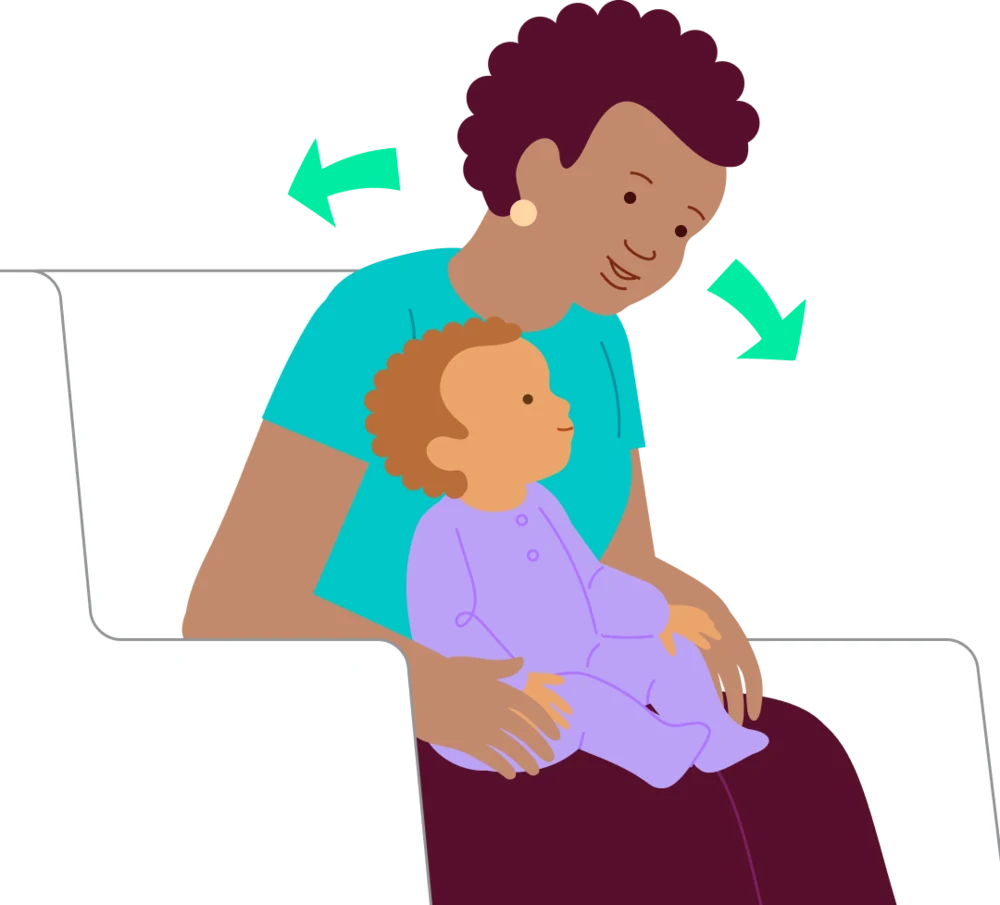
If your baby seems relaxed, slowly shift your own seated body a little from side to side, keeping your hold steady. Do not lift your baby, bounce them, or make them push against your legs.
4. Pause and notice
Stop moving and give your baby time. A look, smile, sound, small movement, or quiet pause can all be their way of joining in.
5. Finish when your baby is ready
End the song if your baby looks away, stiffens, fusses, seems tired, or simply has had enough. Hold them securely as you change position.
How do I keep this activity safe?
Keep your baby securely supported throughout; never stand them on your lap, lift them under the arms, push their feet, or bounce, toss, or shake them. Sit in a stable chair with your feet on the floor and stop if your baby seems uncomfortable. Ask your baby’s clinician or therapist about positioning if you have questions.
Frequently asked questions
Does my baby need to stand or push with their feet?
No. This adapted activity is for shared voice and gentle movement, not a standing or strength exercise.
Should I bounce my baby because the source activity says “springy”?
No. Keep your baby held securely and, if they enjoy it, move your own seated body gently. Do not bounce or lift your baby.
What if my baby does not respond to the song?
That is okay. Listening, resting, looking away, or ending the activity are all valid choices.