How to Explore a Toy with Both Hands with Your Baby
By Down Syndrome Digital ·
Suggested age: 6–10 months
What is two-handed toy play?
Two-handed toy play invites a baby with Down syndrome, listed at 6–10 months in the source, to explore a large toy while comfortably supported. The caregiver offers the toy and gives the baby time to hold or move it in their own way.
What can this activity invite?
• Looking at and reaching for a toy
• Exploring with one or both hands
• Noticing a toy’s sound or movement
• Taking turns with a caregiver
What do I need for this activity?
Choose a lightweight toy made for your baby’s age, large enough to avoid a choking risk, and with no loose or detachable parts. Use a clear floor mat or a supportive seat according to its instructions.
How do we play with a toy together?
1. Get comfortable
Let your awake baby play on a clear floor mat or in a suitable seat used exactly as directed. Stay close and support them in a comfortable position.
2. Offer a toy
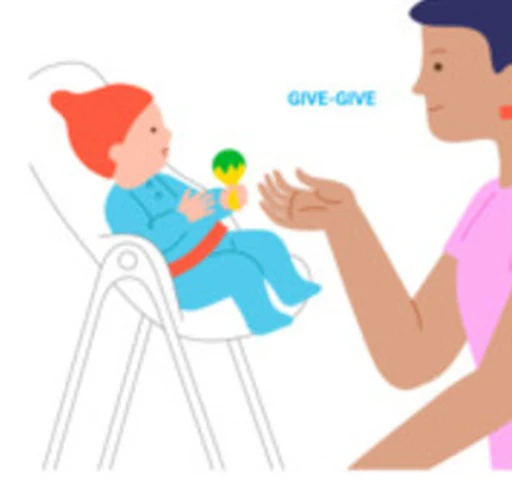
Hold the toy where your baby can see it. Name it or make a soft sound, then wait. Let your baby reach and decide how to hold it.
3. Give time to explore
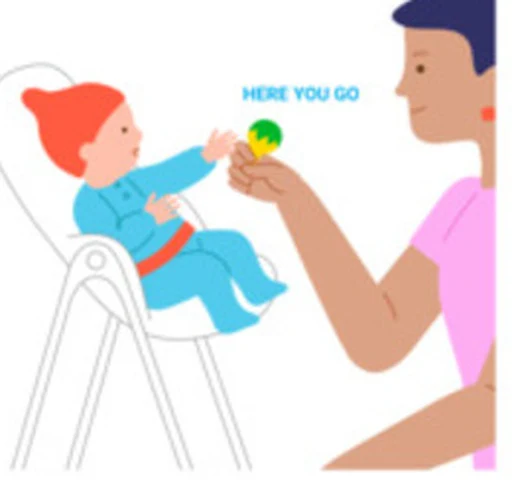
If your baby holds the toy, give them time to look, touch, or move it. They may use one hand or both. Do not position their fingers or shake their arms.
4. Invite a turn
Hold out an open hand and ask, “Would you like to give it to me?” If your baby keeps the toy, accept that and model taking a turn with a second toy.
Keep play safe and enjoyable
Stay within arm’s reach and supervise closely, especially if your baby mouths toys. Do not use objects with small parts, loose pieces, cords, or ribbons. Follow the toy maker’s age guidance.
Frequently asked questions
Does my baby need to hold the toy with both hands?
No. The activity is an invitation to explore. Holding it with one hand, looking at it, or taking a break are all okay.
Should I move my baby’s hands around the toy?
No. Let your baby choose how to reach and hold it. If you have a positioning question, ask their clinician.
Can I use a bottle or a household object?
Use a toy made for your baby’s age instead of a bottle or an everyday object, which may not be designed for safe play.
What if my baby will not give the toy back?
Do not pull it away. Offer another toy, wait, or finish the activity.