How to Help a Baby with Down Syndrome Reach for Overhead Toys
By Down Syndrome Digital ·
Suggested age: 6–10 months
What is overhead toy play?
To invite a baby with Down syndrome to look, reach, and explore toys while lying on their back, try a short, supervised play-gym activity while they are awake on a clear floor mat. This activity is listed for babies aged 6–10 months. Use a stable, purpose-made play gym assembled as directed—not elastic bands or loose cords over a crib—and follow your baby’s cues.
What can this activity invite?
• Looking toward a moving toy
• Reaching and grasping
• Exploring how their hands and eyes work together
• Holding or tapping two toys, if they are interested
What do I need for this activity?
Use a clear, firm floor mat and a stable, age-appropriate play gym assembled exactly as its manufacturer directs. Choose one or two large, baby-safe toys that attach securely and have no small or loose parts. A toy with a built-in sound is optional. Stay within arm’s reach. Do not use elastic bands, loose strings, or improvised attachments, and do not hang toys over a crib or sleep space.
How do I play overhead toy play?
1. Invite a reach
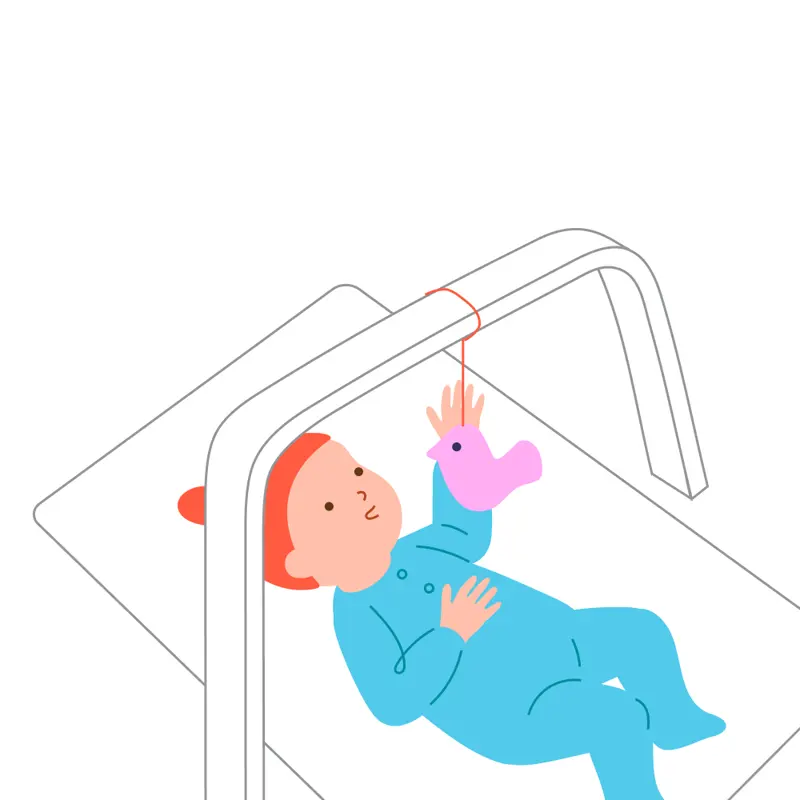
With your baby awake on their back on the mat, sit close and talk with them. Bring one securely attached toy into view and give your baby time to notice it and reach if they want to.
2. Let the toy move
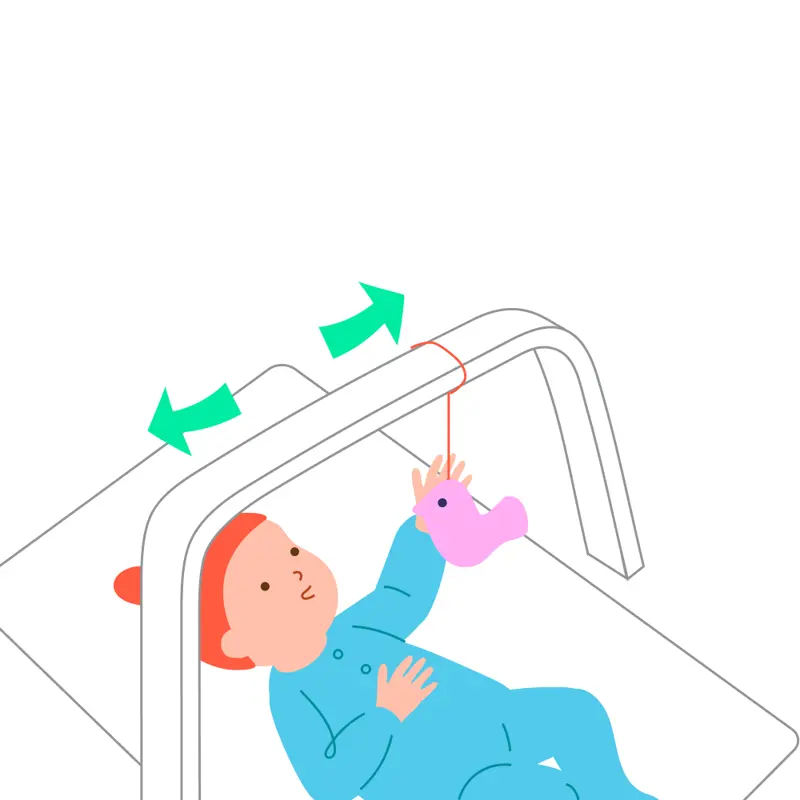
Gently move or jingle the toy from side to side, keeping it in your baby’s view. Pause between movements so they have time to watch, reach, or simply enjoy the sound. If they are not reaching, bring the toy closer without moving their arm for them.
3. Add a second toy
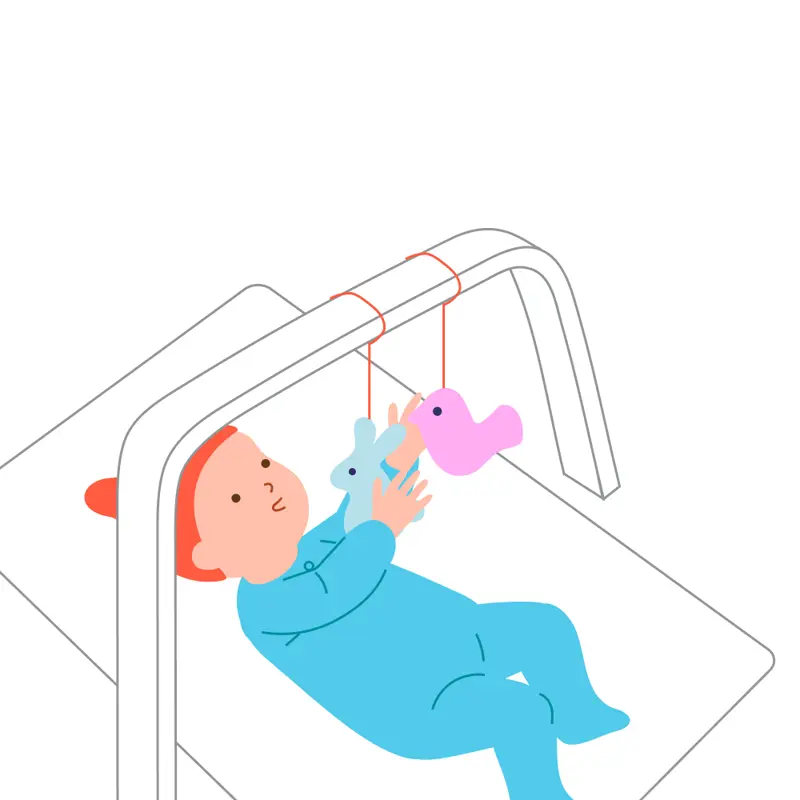
If your baby is still interested, offer a second securely attached toy. Show how the toys can tap together with a quiet “tap, tap,” then pause and let your baby explore in their own way.
Keep play safe and enjoyable
Use this activity only while your baby is awake and closely supervised on the floor. Check that the play gym is stable and each toy is firmly attached before play. Never use elastic bands, loose cords, or improvised hanging toys; keep the crib and other sleep spaces clear. Pause or stop if your baby seems uncomfortable or loses interest. This is a play idea, not a test—babies respond in different ways.
Frequently asked questions
What age is this overhead toy activity for?
The source activity lists it for babies aged 6–10 months. Watch your baby’s cues and stop if they seem uncomfortable or tired.
Can I hang these toys over the crib?
No. Do not attach toys, cords, or elastic bands to a crib or sleep space. Use a stable, purpose-made play gym on the floor during awake, supervised play, following its instructions.
Does my baby need to reach or tap the toys?
No. Watching, listening, reaching, or taking a break are all okay. Give your baby time, and do not guide their arms or hands to make them perform a movement.
Should I start with one toy or two?
Start with one toy. If your baby remains interested, you can introduce a second large, securely attached toy and let them explore at their own pace.