How Can I Offer Spoon-Fed Food Safely to My Baby with Down Syndrome?
By Down Syndrome Digital ·
Suggested age: 6–10 months
What is the spoon-feeding activity?
The source workbook lists “Eats thick foods from a spoon” for ages 6–10 months. This page does not recommend a food texture or assume that a baby is ready for solids at a particular age. Feeding readiness, positioning, and safe textures vary. Ask your baby’s pediatrician or feeding and swallowing specialist what is appropriate for your child before trying this activity.
What can this activity invite?
• A calm, responsive mealtime routine
• Exploring a food texture already included in the baby’s feeding plan
• Looking, leaning, or reaching when ready
• Sharing a quiet moment with a caregiver
What do I need for this spoon-feeding activity?
Use only the food and consistency in your baby’s individual feeding plan, a suitable spoon, and a stable feeding seat that keeps your baby upright and supported. Do not feed a baby in a reclined bouncer or while lying down.
How do I play this spoon-feeding activity?
1. Check the feeding plan
Before offering food, make sure your baby’s care team has said they are ready and has advised you on suitable textures and positioning. Do not use this activity to introduce a new texture on your own.
2. Set up an upright position
Seat your baby securely in an appropriate feeding chair, following its instructions. Make sure your baby is awake, alert, and comfortably supported. Stay close throughout.
3. Show the spoon and wait
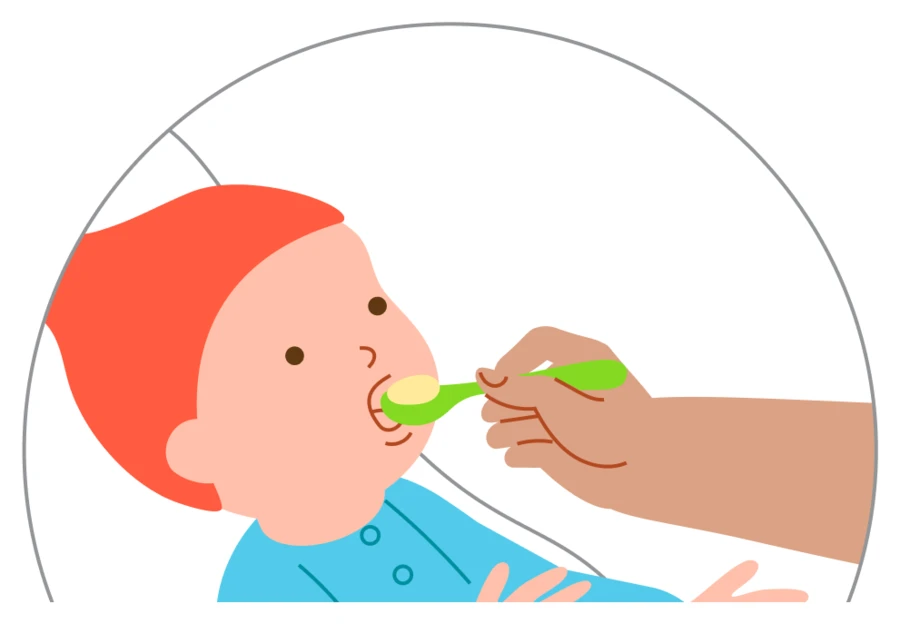
Show a small amount of the food from your baby’s plan. Pause and look for your baby’s cues before bringing the spoon closer.
4. Let your baby choose
If your baby opens their mouth or leans toward the spoon, offer a small amount gently and wait. Do not push the spoon into their mouth, scrape food across their lip, lift their lip, or move their jaw.
5. Pause or finish
Give your baby time between offers. Stop if they turn away, close their mouth, become tired, or seem distressed. Follow your feeding plan if you notice coughing, choking, breathing or colour changes, or another concern.
How do I keep this activity safe?
Only offer food when your baby is awake, upright, and supervised by an adult. Use the seating and food consistency recommended for your baby. Stop feeding if you are concerned about breathing, swallowing, or distress, and follow your clinician’s advice. This activity is not a substitute for feeding therapy or medical guidance.
Frequently asked questions
Does the 6–10 month age range mean my baby is ready for solids?
No. It is the age range listed in the source workbook, not a readiness assessment. Ask your baby’s clinician or feeding specialist.
What should I do if my baby does not open their mouth?
Pause and follow your baby’s cues. Do not insert the spoon or try to open their mouth.
Can I change the thickness of the food?
Only if your baby’s feeding specialist or clinician recommends that change for your child.